Frequently Asked Questions
Support & Documentation Answers to the questions we hear most often, organized into two groups: technical questions about antibody validation methodology and specificity testing, and commercial questions about ordering, shipping…
Frequently Asked Questions — Technical and Commercial
Twelve grouped FAQ entries covering antibody KO/KD validation methodology, specificity testing, species reactivity, and commercial topics including ordering, shipping and catalog scope.
KO/KD (knockout/knockdown) validation confirms that signal intensity in the target lane or stained region drops or disappears when the target gene has been genetically removed or silenced, relative to a wild-type or non-targeting control run in parallel. This demonstrates that the detected signal is dependent on expression of the intended target under the specific conditions tested — same cell line or tissue, same application, same lot.
Specificity testing typically combines KO/KD comparison with orthogonal checks such as molecular weight confirmation by western blot, peptide or protein competition where applicable, and comparison against a second antibody raised to a non-overlapping epitope when available. Results are reviewed against predefined acceptance criteria before a lot is approved for sale.
Validation is specific to the species, cell line or tissue in which it was performed. Predicted cross-reactivity based on sequence homology is not the same as experimentally confirmed reactivity. Always check the species reactivity stated on the individual product datasheet, and treat use in an untested species as exploratory until confirmed in your own system.
Each production lot is tested against the same acceptance criteria used for initial validation, including signal specificity and, where applicable, titration behavior. Lot-specific datasheets and certificates of analysis document the testing performed for that batch rather than relying solely on historical data from earlier lots.
Validated applications (such as western blot, immunofluorescence, immunohistochemistry or flow cytometry) are listed individually on each product page. Validation in one application does not imply validated performance in another — an antibody confirmed for western blot has not necessarily been tested for immunohistochemistry, and dilution or protocol optimization may still be required within a validated application.
Follow the storage temperature, buffer composition and freeze-thaw guidance on the product datasheet. Repeated freeze-thaw cycles, storage outside the stated temperature range, or dilution into incompatible buffers can degrade performance even for a properly validated lot, so handling conditions are treated as part of the validation scope.
Orders can be placed directly through the product catalog using standard checkout, or through a purchase order for institutional accounts. Accepted payment methods and institutional billing options are confirmed at checkout or by contacting the support team directly.
Shipping timelines depend on product format, cold-chain requirements and destination. Temperature-sensitive reagents are shipped with appropriate packaging to maintain stability in transit. Specific lead times for a given order are confirmed at the time of purchase or by contacting support before ordering time-sensitive work.
International shipping availability varies by destination and product classification. Customs duties, import taxes and clearance requirements are generally the responsibility of the receiving party unless otherwise agreed in advance. Confirm destination-specific logistics before placing an international order.
Bulk quantities and custom formulations (such as carrier-free preparations or alternate conjugates) can be requested for select products. Availability depends on the specific antibody and current production capacity, so these requests are handled case by case through direct contact rather than standard checkout.
The catalog is organized around defined research areas, including mitochondrial and metabolic markers, apoptosis signaling, cytoskeletal and trafficking proteins, kinase and signal transduction targets, cell surface and secreted proteins, recombinant proteins and growth factors, and gene editing and cloning tools. Coverage within each category varies by target and is reflected in the live catalog rather than a fixed master list.
Lot-specific certificates of analysis and full datasheets are available from each product page. If a product fails to perform as validated under the stated conditions, replacement or credit requests are reviewed on a case-by-case basis — contact support with lot number and experimental details so the issue can be assessed against the original validation data.
Clarify precisely what KO/KD validation does and does not guarantee.
This section covers Visitor understands the boundaries of validation claims to avoid overinterpreting badges. using the available product and source context.
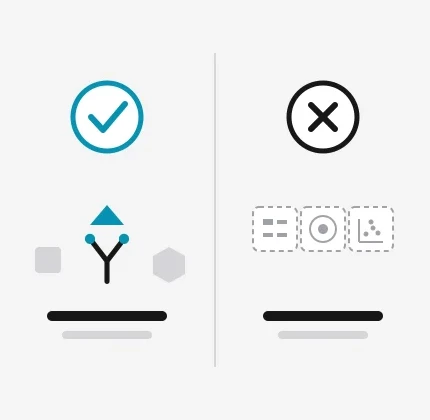
- Available source evidence is retained for context, with unsupported claims avoided.
- Addresses a likely recurring question with precision following the general accordion.
- Unsupported performance, protocol and interchangeability claims are excluded from this public copy.
Route unresolved questions to the Contact page.
This section covers Visitor without a direct answer knows how to escalate their question. using the available product and source context.
Request information