Validation Is the Product, Not the Afterthought

About BioTX BioTX exists to close the gap between what a datasheet claims and what a knockout or knockdown experiment can actually confirm.

Browse productsContact us

Sourcing Discipline and the Quality Philosophy Behind It

How We Choose What We Carry

Most antibody catalogs are built by aggregation: licensing agreements, drop-shipping arrangements, and a product page for every lot a manufacturer is willing to supply. BioTX works from the opposite direction. We start from a target — a protein, a modification, a pathway node researchers are actively trying to measure — and work backward to the smallest set of reagents that can be defended with genetic evidence.

That means every antibody, recombinant protein, or cloning reagent in the catalog has passed through a sourcing filter before it is ever listed: who generated the immunogen, what expression system produced the recombinant standard, and whether the manufacturer's internal QC data includes orthogonal validation rather than a single immunoblot against a vendor-supplied lysate.

Why Knockout and Knockdown Evidence Matters

A specific-looking band on a western blot is not the same as a specific antibody. Off-target binding, cross-reactive paralogs, and non-specific secondary signal can all produce a clean-looking result that has nothing to do with the protein named on the label. The only evidence that directly tests specificity is a genetic loss-of-function comparison: run the same antibody against a wild-type sample and a CRISPR knockout or validated knockdown of the same gene, side by side. If the target band disappears in the null background and nowhere else, the antibody is doing what the datasheet claims.

We treat that comparison as a floor, not a bonus feature. It is the baseline we expect a supplier relationship to produce before a product earns shelf space, and it is why our catalog is deliberately narrower than a typical reseller's.

What a Supplier Relationship Has to Demonstrate

Before a manufacturer's line is added to the catalog, we look for a track record of reproducible lot-to-lot performance, transparent disclosure of the validation method used — not just a pass/fail claim — and a willingness to share raw data on request. Reagents that depend on proprietary black-box QC, or that only offer validation summaries without underlying images or blots, do not clear that bar. This is a narrower, slower way to build a catalog, but it is the only way we know to keep the KO/KD standard meaningful rather than decorative.
Sourcing Discipline and the Quality Philosophy Behind It

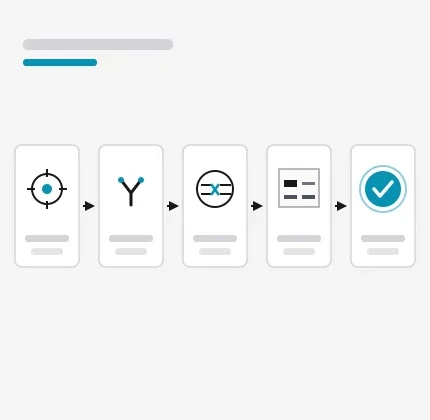
The KO/KD Validation Workflow

Every antibody we list has moved through this sequence before it carries a catalog number. It is the shared path from a gene we want to measure to a reagent we are willing to stand behind.

1

Target Selection

Identify the gene product and the isoforms, modifications or splice variants an antibody needs to distinguish.

2

Construct Design

Design guide RNAs or shRNA constructs targeting the gene, with controls to limit off-target editing.

3

KO/KD Generation

Generate a CRISPR knockout line or validated knockdown population alongside a matched wild-type control.

4

Signal-Loss Confirmation

Run the candidate antibody against null and wild-type samples; confirm the target band drops out only in the null background.

5

Catalog Release

Document the comparison, attach it to the product record, and release the lot under a KO/KD-validated listing.

What's in the Catalog Beyond Antibodies

The KO/KD standard described above applies first to antibodies, but it shapes the rest of the catalog too. Antibody coverage spans mitochondrial and metabolic markers (including OXPHOS complex subunits), apoptosis and cell-death signaling, cytoskeletal and trafficking proteins, kinase and signal-transduction targets, and cell-surface and secreted proteins used in flow cytometry and ELISA workflows.

Around that core, we carry recombinant proteins and growth factors produced under documented expression and purification conditions, intended to pair directly with the antibodies built to detect them — a recombinant standard is only useful as a positive control if its identity is as well-documented as the antibody being tested against it.

We also stock the tools that sit upstream of validation itself: gene-editing validation tools for labs generating their own knockout or knockdown lines, and molecular cloning reagents for construct work. Carrying these categories alongside the antibodies they validate keeps the catalog organized around a single workflow rather than a loose assortment of unrelated product lines.

Still Weighing Specificity Data?

If a product page doesn't show you enough of the knockout comparison, or you need validation data for a target that isn't listed yet, talk to us directly — technical questions go to people who read the blots, not a sales queue.

Contact the Technical Team